



From inner turmoil to freedom
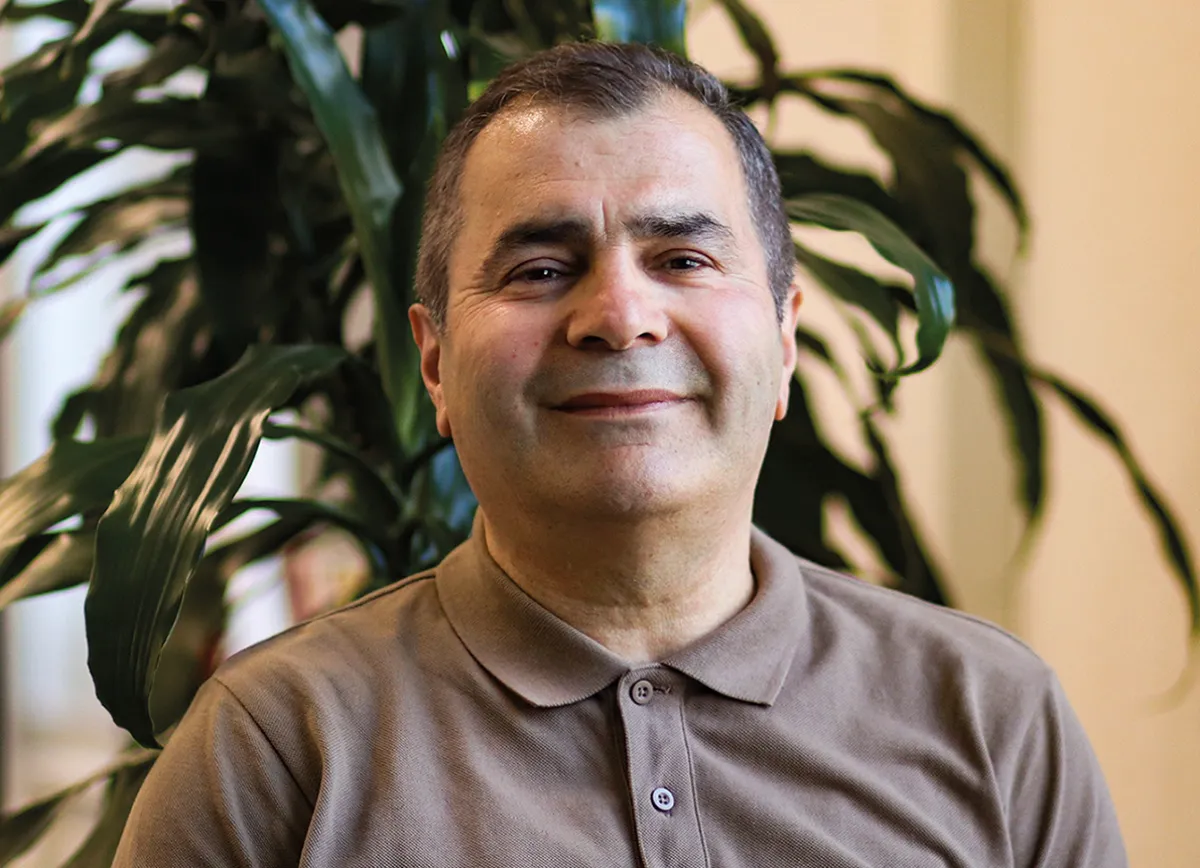
Vicdan – the Azerbaijani word for ‘conscience’ – serves as the starting point for this column by Abil Hasanov. His writings interpret literature and philosophy as forms of self-affirmation and resistance: against dogma, against power, and against intellectual complacency. The focus is on thinkers and poets whose work affirms the unity of conviction and existence. Criticism appears here as a precise form of judgement – and as a practice of intellectual freedom.
We often search for the meaning of life between the pages of thick books, on dusty shelves. We believe that someone will write down a formula and suddenly all will be revealed. But Hermann Hesse whispers to us - to find meaning, man must summon the courage to look into the depths of his own soul.
Reading Hesse is like looking into a mirror. But this is no ordinary mirror - it is a magical lantern that illuminates the dark corners of the soul. His life began with a rebellion. When he fled the seminary, he sent the world a simple but determined message: "I either want to be a poet or nothing at all." This was not so much youthful defiance as the first awakening of the self. Hesse understood that to live according to someone else's script was to perish spiritually.
Imagine him for a moment - in the dim light of the night lamp, sitting at his desk, constructing the labyrinth of his inner world on paper. For Hesse, writing was not just art. It was a form of personal salvation.
His protagonists are travelling the same path. Siddhartha teaches us that it is impossible to learn the truth from another. Wisdom is not a gift. Man must stand on the banks of his own river, listen to the current and make his own mistakes. For only truth lived is truthful.
Harry Haller – the Steppenwolf – is a portrait of man's inner turmoil. Each of us possess both a sacred and a savage side. Hesse does not teach us to destroy either of these, but to understand them. For to be whole, man must accept his own contradictions.
Life often seems, in his works, like a game. But this is no light entertainment. It is a game that requires discipline, creativity and freedom - a subtle but serious harmony. Why does the bird that fights its way out of the egg in Demian seem so familiar to us, even after a century? Because we are still in our shells. Because we are still afraid of facing our inner shadow.
Hesse's interest in Eastern philosophy, particularly the wisdom of India and China, reaches its peak in his masterpiece Siddhartha. This work teaches us that one cannot learn the truth from others. Although Siddhartha meets Buddha, he does not accept his teachings. Because he knows: wisdom cannot be transferred as a gift; it can only be attained through one's own experience. Here we see the traces of the Upanishads and the Bhagavad Gita. As Siddhartha stands on the banks of the river, he realises that time is an illusion (Maya). The river is simultaneously everywhere and yet flows constantly. This corresponds to the concept of unity in Eastern mysticism.
Hesse wrote that man only becomes free when he discovers the path to himself. Perhaps the meaning of life is precisely this path itself. Meaning is not something you find - it is something you create. It sometimes arises in very simple moments: watching the rain through the window, in that brief moment of silence when you feel you owe nothing to anyone, in that quiet minute of ecstasy when you are alone with yourself.
Dear reader, if your soul is depressed today, perhaps this is a call to your own path. Perhaps you too are standing on the banks of your own river. And perhaps the journey has already begun.
Did you enjoy this text? If so, please support our work by making a one-off donation via PayPal, or by taking out a monthly or annual subscription.
Want to make sure you never miss an article from Literatur.Review again? Sign up for our newsletter here.