



When a Wall Enters a Children’s Story
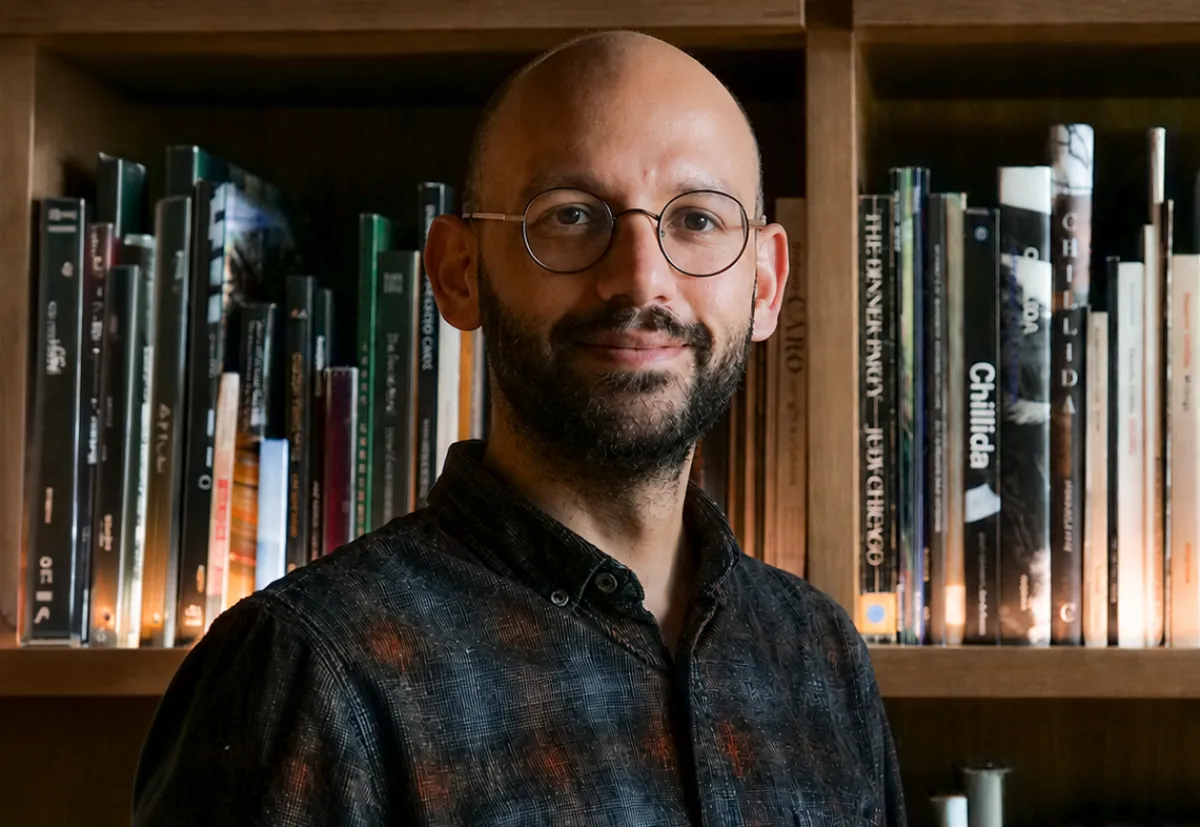
Loaay Wattad is a cultural sociologist specializing in Palestinian and Israeli children’s literature, with a particular focus on politics, borders, and childhood. He is an EUME Fellow at the Forum Transregionale Studien in Berlin and a Minerva Postdoctoral Fellow at Freie Universität Berlin. He is also an advisor for the Arabic and Hebrew children’s literature collections at the International Youth Library in Munich. His research explores the intersections of literature, politics, and childhood, with particular attention to Palestinian children’s literature.
I grew up in Jatt, a small Palestinian village in the 48 territories. As a child, I often heard my grandmother speak about another village called Zita. She spoke of it with the familiarity reserved for places one knows intimately. She had visited it often, she told me. She would simply walk there.
For years, Zita existed for me mainly through her stories. I knew its name but little else. I had never walked its streets, visited its houses, or met anyone who lived there. In the geography of my childhood, Zita belonged less to the landscape around me than to the landscape of my grandmother’s memory.
It took me years to understand something remarkably simple: Zita was right there.
Jatt and Zita are neighbouring villages, Jatt to the west and Zita to the east. My grandmother had known them as part of a landscape one could cross on foot. The political geography I inherited told a different story: Zita was on the other side.
In Arabic, we sometimes speak of a remote and almost unreachable place as "Akher al-Denia"—the end of the world. That is how Zita existed in my childhood imagination: one of the places geographically closest to my village, yet impossibly distant.
The boundary changed as I grew older. As a child, I remember mainly wire, a fence that marked separation but remained almost transparent. Later, after I had left Jatt to study at Tel Aviv University, I returned home to find the landscape transformed. Where I remembered wire, there now stood concrete. The almost transparent boundary of my childhood had become a high wall. The Israeli Separation Wall.
Construction of the Separation Wall began in 2002, during the Second Intifada. Israel presented it as a security measure intended to prevent attacks, but its route did not simply follow the Green Line: large sections were built inside the occupied West Bank, reshaping Palestinian movement, access to land, and everyday geography. For many Palestinians, the wall was therefore encountered not as an abstract political border but in ordinary acts of movement: reaching a field, a school, a neighbouring town, or a family member.
My grandmother had known Zita as somewhere one walked to. I had known it as somewhere one heard about. Now it was somewhere I could no longer even see.
Only later did I understand what was so unsettling about this geography. The wall had done more than restrict movement between two neighbouring places. It had made a real village seem imaginary.
Perhaps this is why I became interested in walls in children’s literature. Children’s books are full of them: walls that divide kingdoms, houses, families, animals, and peoples; walls that protect or imprison; walls that are climbed, broken, painted, or flown over. They seem to ask a simple question: what is on the other side?
But reading Palestinian and Israeli children’s books about the Separation Wall led me to a different question: what happens to the wall itself when it enters a children’s story?
I soon realized that this question could not be answered by looking at Palestinian and Israeli books alone. A wall is one of those deceptively simple objects that children’s literature can make mean almost anything. It can mark a political border or an imaginary kingdom, protect those inside or exclude those outside, separate enemies or conceal something we cannot understand. To understand the wall I had grown up beside, I first needed to look at other walls.
 Fox Chapel
Walls Everywhere
During my fellowship at the International Youth Library in Munich, I began collecting children’s books in which walls, fences, and other barriers played a central role. What began as a search for books about political borders quickly expanded. Walls seemed to be everywhere, but they did not all do the same narrative work. Some separated countries or communities; others divided neighbours, strangers, or imaginary kingdoms. Some were built to exclude, others to protect. And some existed almost entirely in the minds of those standing on either side.
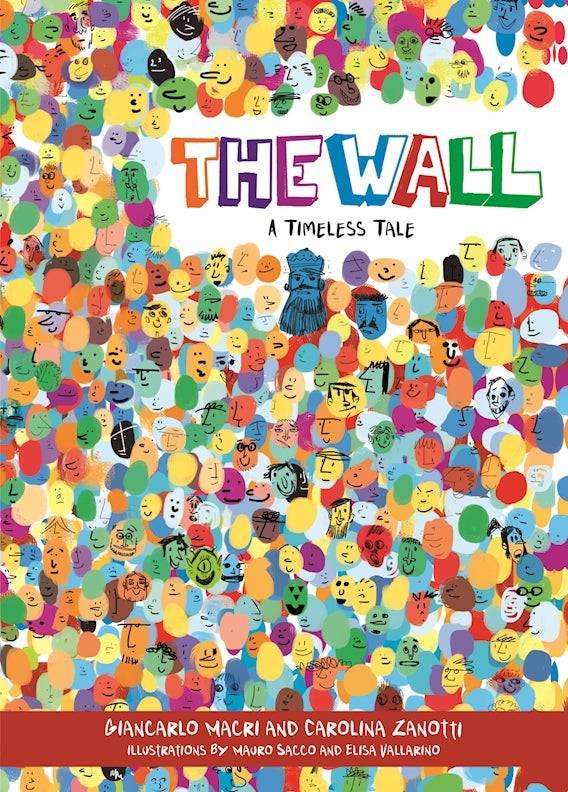
In The Wall: A Timeless Tale (2019), by Giancarlo Macrì and Carolina Zanotti, a king looks at the multitude of people inhabiting his kingdom and decides that those who do not resemble him must leave. As people disappear, the book itself begins to empty: the exuberant crowds of differently coloured faces give way to increasingly vacant pages, until a physical pop-up wall rises from the centre of the book. The joke is that exclusion soon defeats itself. The king wants gardeners, artists, builders and other skilled people, only to discover that he has banished them all. Eventually, the wall comes down and the crowded, colourful kingdom returns. The wall here is a deliberately universal political fable: a barrier produced by xenophobia that impoverishes the society supposedly protected by it.
 Penguin
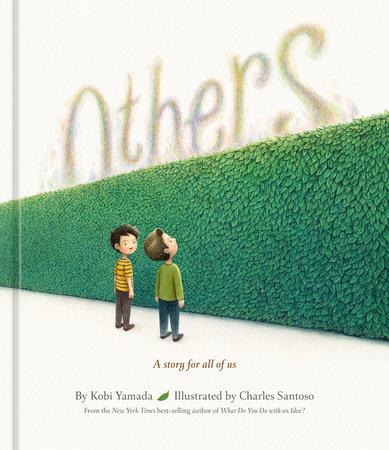
Other books make the barrier less explicitly political. Kobi Yamada and Charles Santoso’s recent Others: A Story for All of Us (2026), for example, replaces concrete with a hedge. Two children stand beside it and speculate about the people living “over there.” At first, difference is imagined almost fantastically: perhaps those others have wings or tentacles; perhaps they are machines. Gradually, the questions become more ordinary and more intimate: do they think, feel, become frightened, love their families? Here the barrier is primarily epistemological. What separates “us” from “them” is not only the hedge but everything imagined in the absence of contact. The story consequently does not need to demolish a wall; it needs to dismantle an idea of the Other.
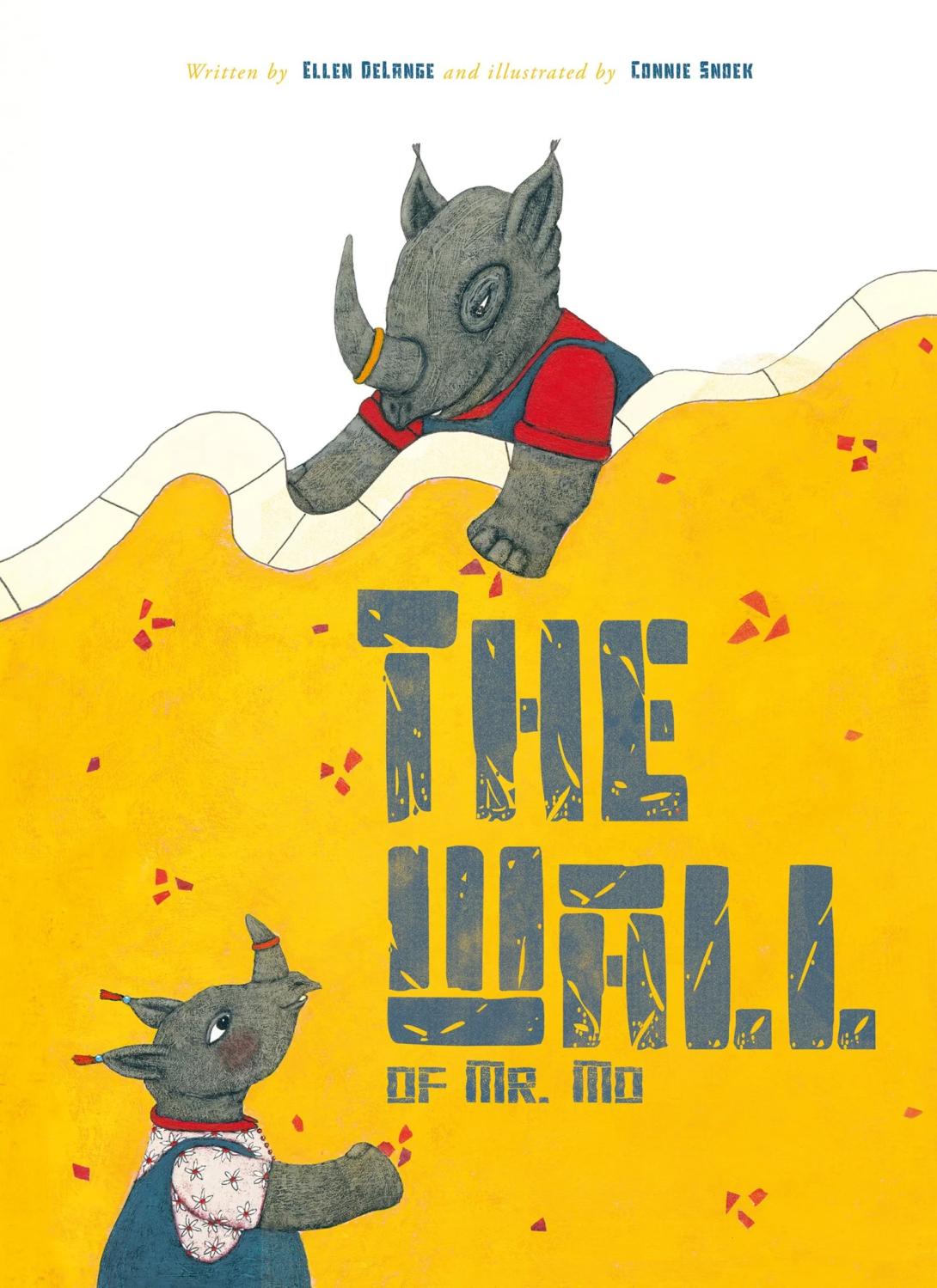
There are stranger walls still. In Ellen Delange and Connie Snoek’s The Wall of Mr. Mo (2022), a rhinoceros becomes obsessed with building an extraordinary wall around his house. The wall grows higher and more elaborate as he works on it, attracting the curiosity of his neighbours. Yet the building project ultimately generates the very sociality that a wall would seem designed to prevent: others gather, participate and transform the construction and the space around it. Visually, the book repeatedly places the enormous yellow wall against tiny houses and figures, making its disproportion almost comic; by the end, colour and movement have spread back into the surrounding community.
 Clavis
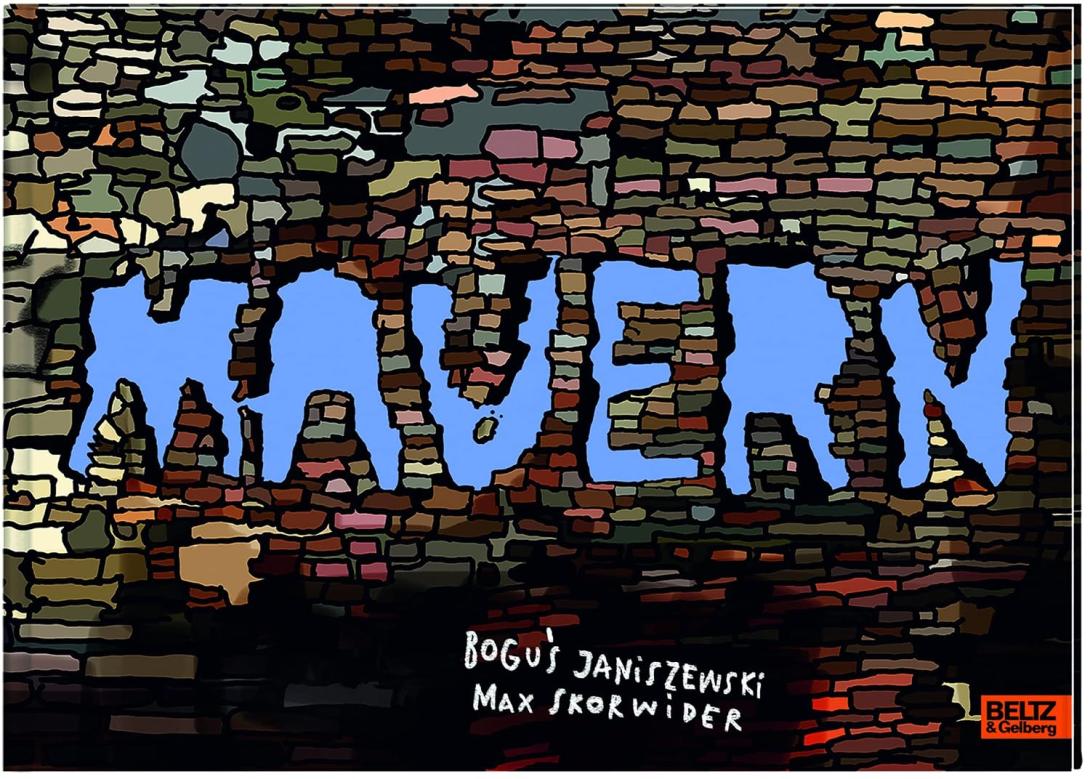
And then there are books in which the wall becomes history itself. Bogusław Janiszewski and Max Skorwider’s Mauern (2022) turns the Berlin Wall into the subject of a visually dense nonfiction picturebook: the wall is not an abstract division between two invented peoples but an actual political structure whose construction, surveillance, crossings, escapes and eventual collapse have to be explained to children. In books of this kind, the wall cannot simply stand for separation in general. Its meaning depends on who built it, when, for what purpose, who was prevented from crossing it, and what happened to people who tried.
Seen together, these books made me realize that “the wall” is hardly a single motif. Its meaning depends not simply on what it separates, but on the story a book tells about why the separation exists—and what, if anything, might overcome it.
This was the point at which my research in Munich brought me back to Jatt and Zita. The question was no longer simply why walls appear so frequently in children’s books. It was what kind of story a particular wall allows us to tell. Because once a wall is detached from history, it becomes remarkably easy to make both sides identical: two kingdoms, two neighbours, two children who misunderstand one another. But a historical wall raises more difficult questions. Who built it? Who can cross it? Whose movement does it regulate? And what happens when a children’s book chooses to answer—or avoid—those questions?
 Beltz
Beltz
When the Wall Becomes a Metaphor
When I turned from the international corpus to Israeli children’s literature, I found relatively few books that dealt directly with the Separation Wall. More often, the wall appeared at a slight remove from political reality, transformed into a more universal story of division, fear, and reconciliation.
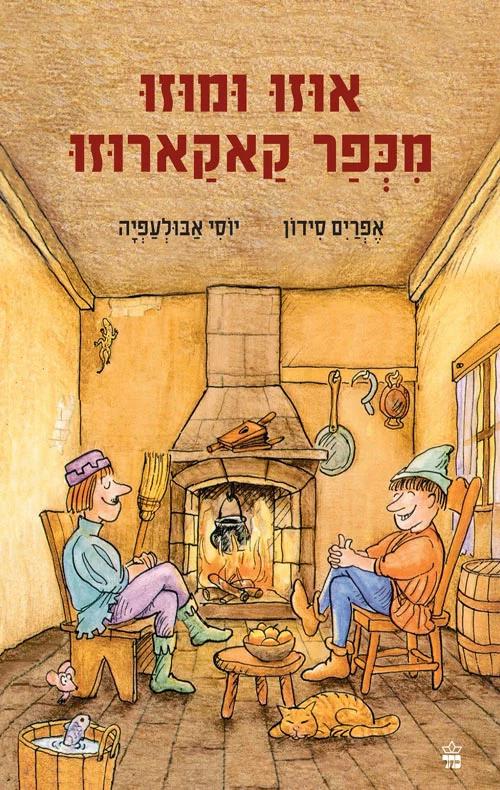
One of the most revealing examples actually predates the Separation Wall itself. Ephraim Sidon’s Uzu and Muzu from Kakaruzu (1987), illustrated by Yossi Abolafia, tells of two brothers who live happily together until a ridiculous quarrel divides them. A wall is built through their shared home, and over generations the original reason for the conflict is forgotten. What remains is fear. Each side invents increasingly monstrous stories about the people living beyond the wall, until two descendants finally meet and discover that there are no monsters there at all. The wall collapses together with the fantasy of the enemy.
The date matters. Published in 1987—fifteen years before construction of the Israeli Separation Wall began—the book could not have been responding to the concrete structure that would later reshape the landscape of Israel and the West Bank. Yet it is difficult to read Sidon and Abolafia’s wall today without seeing it differently. Abolafia’s illustrations are important here: they place the story in a deliberately distant, almost folkloric world rather than in a recognizable Israeli or Palestinian landscape.
 Keter
Keter
This distance allows the wall to function as a fable. Separation begins with an absurd quarrel, survives because the two sides cease to encounter one another, and ends when their descendants finally meet. The wall is therefore not primarily a structure of territorial or political power. It is the materialization of mutual fear, inherited hatred, and the stories one side tells about the other.
A similar narrative logic appears more explicitly in Talia Ganel-Joya’s Butterflies of Hope (2012). At its centre are two boys—one Israeli and one Palestinian—both named Amir. The shared name is hardly incidental. The story constructs the children as mirror images across a political divide: two childhoods, two sides, but fundamentally the same human child. The literary movement is therefore toward recognition. The task is to see past the categories that separate them and discover similarity underneath.
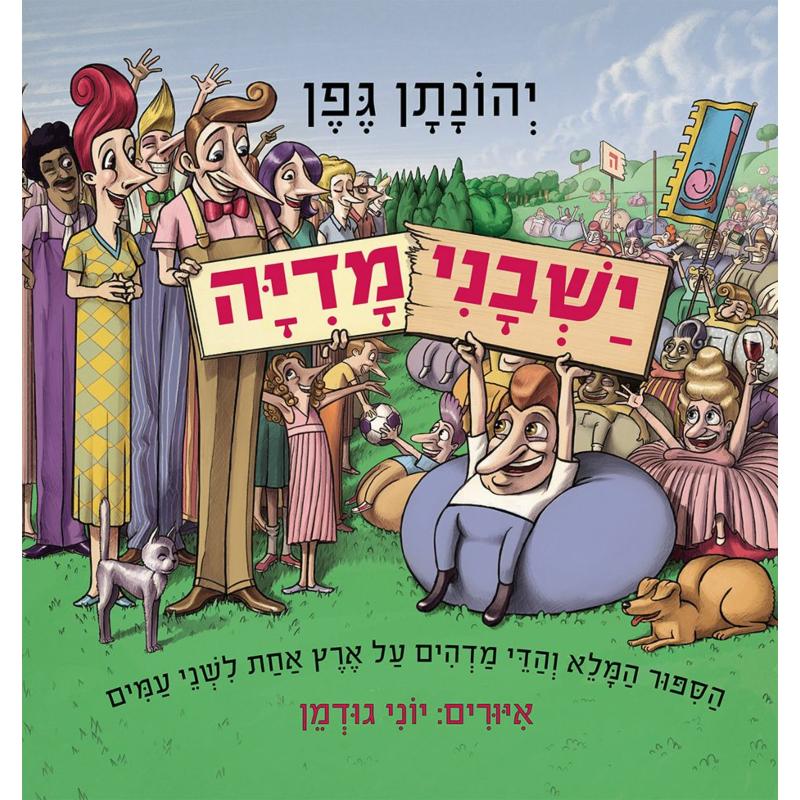
This structure is taken almost to the point of parody in Jonathan Geffen and Yoni Goodman’s Yeshvanimadia (2015), subtitled The Full and Rather Amazing Story of One Land for Two Peoples. Its two populations are absurdly different: in Yeshvania everyone sits, while in Amadia everyone stands. Their border even runs through the local grocery store, between the vegetables and the dairy products. Conflict escalates, a formidable barrier rises between the countries, and eventually a prince from one side meets a princess from the other.
 Dvir
Dvir
The absurdity is precisely the point. By replacing Israelis and Palestinians with bodies defined by sitting and standing, Geffen strips difference of its historical content. No competing histories are needed to understand the conflict; no account of land, displacement, occupation, security, or sovereignty is necessary. Difference itself has become ridiculous. The solution can therefore also be interpersonal: encounter, love, and learning to live together.
These books are not identical, nor do they represent Israeli children’s literature as a whole. But placed beside one another, they reveal a recurring imaginative operation. The political wall becomes a relational wall. Instead of asking primarily who built the barrier, whose land it crosses, or whose movement it restricts, the stories ask why two sides fear, hate, or fail to understand one another. Political asymmetry is translated into narrative symmetry: two brothers, two peoples, two Amirs, two kingdoms.
This transformation has an obvious appeal, particularly in literature for children: it makes reconciliation imaginable. If walls are sustained by prejudice or inherited fear, encounter can undo them. But this literary move also has a cost. Symmetry is not merely an ethical ideal; it is also a narrative technology. Once both sides occupy equivalent positions on either side of the page, difficult questions become easier to leave outside the story: Who built the wall? Who controls its gates? Who requires permission to cross?
 Tamer Institute
This is where the Israeli books began to look different to me—not because allegorical walls are uniquely Israeli, but because here the allegory exists alongside an actual wall. Their walls often resemble the universal wall of the fable—the wall between us and them, sustained by fear and overcome through recognition. Yet the wall outside the book is not an allegory. And when a historically specific wall is transformed into a universal story about two sides learning to see one another, something is gained—the possibility of empathy—but something else may disappear: history.
The Palestinian books begin from almost the opposite problem. Their children generally do not need to discover that there are human beings on the other side of the wall. They already know who—or what—is there: a friend, a grandmother, an orange grove, a spring, another Palestinian village. Their problem is not how to recognize the other side.
Their problem is how to reach it.
When the Wall Refuses to Become a Metaphor
In these stories, the wall may acquire symbolic meanings, but it rarely ceases to be a material obstacle. It cuts through recognizable landscapes, interrupts familiar routes, and makes previously accessible places unreachable. Rather than transforming the wall into a story about relations between two sides, these books repeatedly ask what happens to everyday life when movement itself becomes the problem.
In Mariam Hamed and Insaf Al-Hajj Yaseen’s In One Space (2008), for example, the wall separates two children who already know one another. There is no initial hostility to overcome and no revelation that the child beyond the barrier is “just like me.” Friendship precedes separation. The children instead improvise a way to preserve their relationship, sending kites across the wall. The kite does not destroy the barrier. It discovers a space in which the barrier is momentarily less powerful: the sky.
That distinction becomes even clearer in Nuha Subeih and Ismail Dweik’s Behind the Wall (2018). Here, separation is not principally a psychological condition between two communities. The wall—or fence—interferes with ordinary movement through the landscape. Mishmishah, a sheep, wants to reach the spring on the other side and cannot understand why the route that should be open to her has been closed. The apparent simplicity of the animal story makes its central question almost childlike: why should something standing in the landscape determine where a living creature is allowed to go? The narrative therefore begins not with fear of the Other but with the strangeness of restriction itself.
This is one of the most important differences I found between the two corpora. In many of the Israeli stories, the narrative problem can be described horizontally: there are two sides, each looking toward the other, and the story asks whether they can overcome the fear between them. In the Palestinian books, the problem is often spatial: there is somewhere the child wants to go, and something prevents the journey. The wall is less a boundary between identities than a technology that reorganizes everyday geography, turning what is geographically near into something practically unreachable.
And once movement on the ground becomes difficult, Palestinian children’s literature repeatedly looks upward.
Dima Suhweil’s Iman and the Kite (2008), illustrated by Dima Abu al-Haj, begins at a kite festival in Gaza. A magical kite invites Iman into the sky, carrying her above a world shaped below by military aircraft, weapons, and violence. The kite is therefore more than a conventional symbol of hope. It creates a temporary geography in which a Palestinian child can move differently.
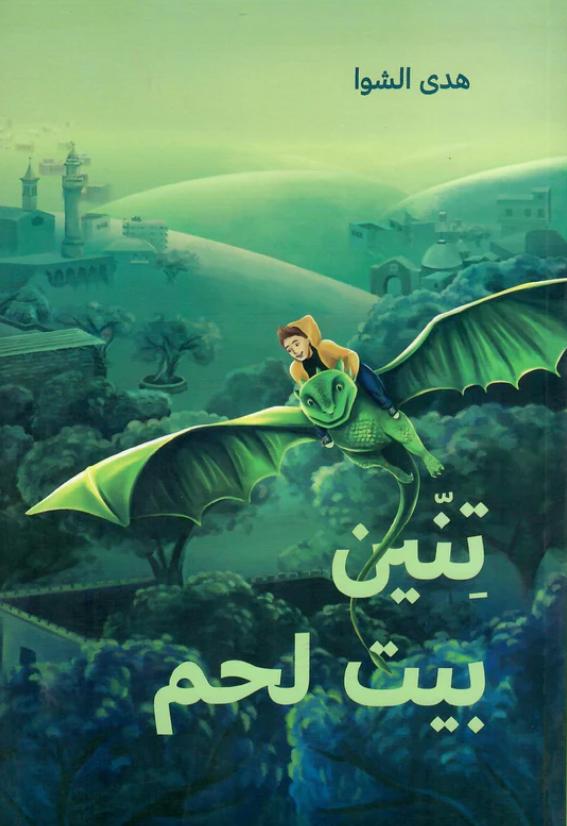
Huda El Shuwa’s The Dragon of Bethlehem (2017), illustrated by Hanane Kai, makes this vertical movement still more explicit. Its protagonist, Khadr, is a sixteen-year-old boy living in Dheisheh refugee camp near Bethlehem who has never seen the sea or visited Jerusalem. Then a dragon appears and takes him into the sky, above Bethlehem, Jerusalem, and the surrounding landscape.
The fantasy does something politically and aesthetically important. It does not pretend that the wall has vanished. Nor does Khadr discover that the problem was merely his inability to understand the people beyond it. Instead, the dragon changes the scale from which the landscape can be seen. From the ground, Palestine is experienced through interruption: camp, checkpoint, wall, road, inaccessible city. From the air, these fragments can momentarily be perceived as parts of a continuous landscape.
This is where the Palestinian books produce a paradox that has increasingly interested me: the more insistently real the restriction, the more fantastic the means of movement become. Palestinian fantasy frequently gives its young protagonists precisely the capacities that political geography denies them: invisibility, flight, magical passage, or alternative routes.
The sky, however, is not simply a free space. Palestinian children’s books know that it is occupied too. Iman’s kite rises into a sky threatened by military aircraft; Khadr hears drones above Dheisheh. This produces another opposition absent from the simple image of “flying over the wall.” The sky contains two radically different forms of flight: the technological flight of surveillance and military power, and the fragile, imaginative flight of children, kites, butterflies, and dragons.
The Palestinian wall, then, does become symbolic—but through a different literary operation. It can symbolize confinement, fragmentation, or interrupted continuity, yet it remains an obstacle that characters physically encounter. Fantasy does not transform the wall into something else. Fantasy transforms the child’s capacity to move in relation to it.
The Geography of Imagination
And this brings me back to Zita. My grandmother did not need to imagine a dragon or a kite to reach the neighbouring village. She walked there. By the time of my childhood, the same journey had migrated from ordinary geography into story. Zita was still just across the landscape from Jatt, but it belonged to a world I knew through memory and imagination rather than experience.
Perhaps this is what walls ultimately do in children’s literature: they do not simply divide space; they reorganize the imaginable. The Israeli and Palestinian books discussed here respond to this division in markedly different ways. In several Israeli stories, the wall is detached from the political conditions that produced it and transformed into a metaphor for mutual fear, misunderstanding, and failed recognition. This move makes reconciliation imaginable, but often at the price of symmetry: two sides appear equally separated by a wall whose builders, gates, and unequal effects gradually disappear from the story. The political question of who is able to move, and who is prevented from moving, becomes an ethical question of whether we can learn to see one another differently. Palestinian books tend to resist this abstraction. When children cannot cross, kites, butterflies, and dragons can. Fantasy, in this sense, does not soften political reality; it exposes what that reality has made impossible.
And this may be the most powerful thing children’s literature can do with a wall: not necessarily make it disappear, but make the geography it creates appear strange rather than natural or inevitable. The Palestinian books discussed here do this by reminding us that what now requires fantasy may once have been ordinary. My grandmother walked to Zita. I grew up hearing stories about it. Somewhere between those two sentences lies the history of a wall—and perhaps also the reason children’s literature keeps imagining ways to cross one.
Did you enjoy this text? If so, please support our work by making a one-off donation via PayPal, or by taking out a monthly or annual subscription.
Want to make sure you never miss an article from Literatur.Review again? Sign up for our newsletter here.