



Identity and Presentation
 Éditions Textuel
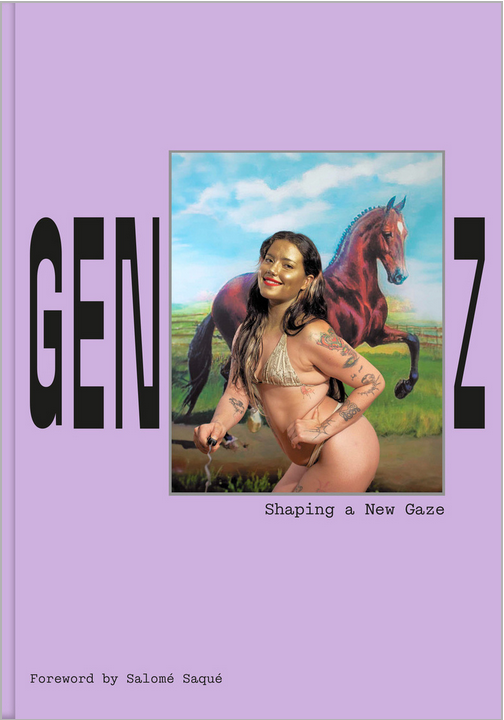
Collective, Salomé Saqué, Nathalie Herschdorfer | GEN Z: Shaping a New Gaze | Éditions Textuel | 256 pages | 200 photos | 45 EUR
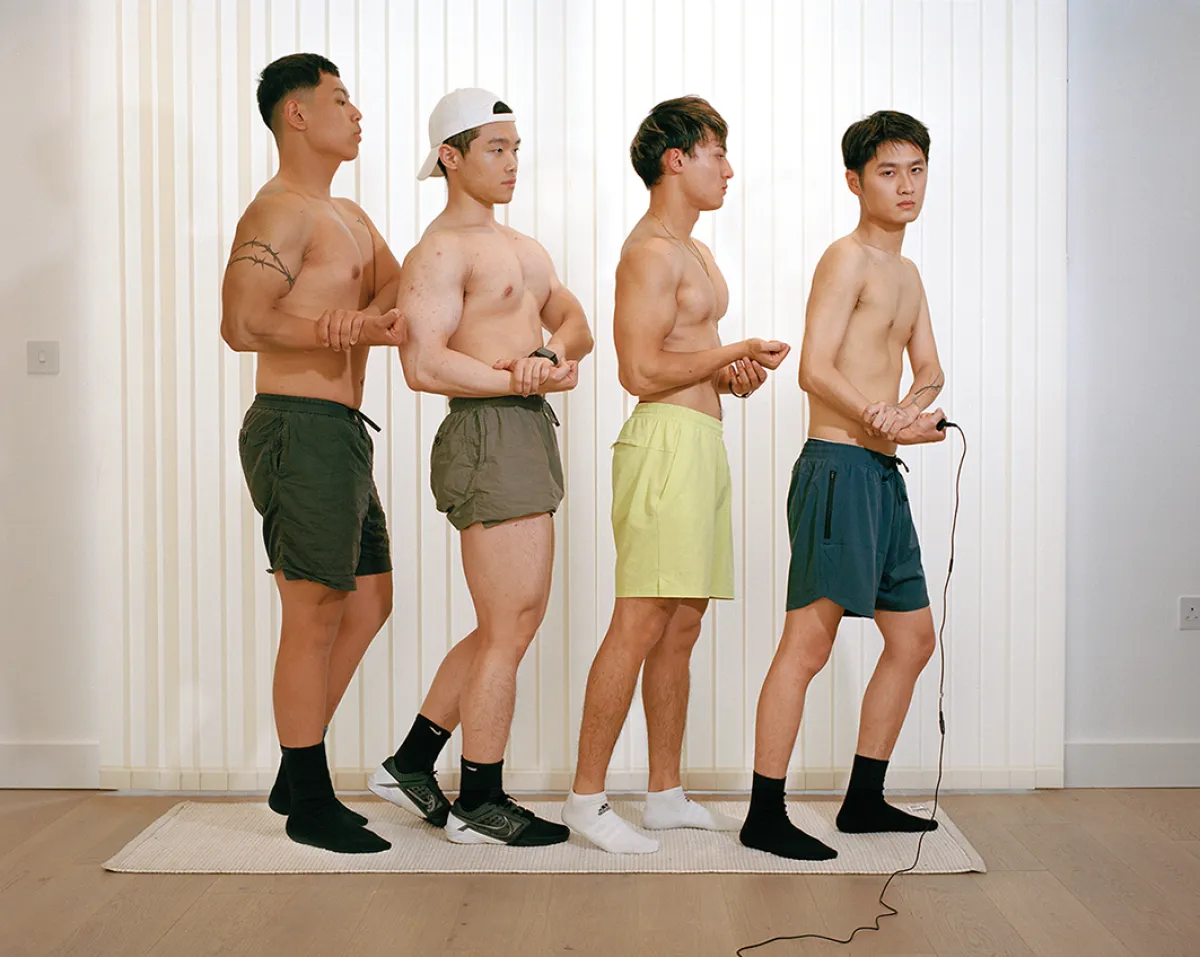
The exhibition Gen Z: Shaping a New Gaze, currently on display at the Fotografie Forum Frankfurt, attempts something that many major retrospective exhibitions fail to achieve: It does not merely seek to illustrate a generation, but to illuminate an attitude. The risk of such projects is obvious. Generation Z has long been a buzzword—a receptacle for the projection of older generations, somewhere between activism, digital overload, and narcissistic self-presentation. This is precisely why this exhibition is surprising. For it rejects simplistic diagnoses.
Sixty six artists from around the world present photographs, installations, and hybrid visual forms that, rather than forming a coherent generational portrait, constitute a nervous and contradictory echo of the present. The curators do not focus on spectacular theses, but rather on the consolidation of experience: personal stories, fragile identities, body images, family constellations, migration, gender, and belonging constantly interweave. Central to this is the concept of intersectionality—that is, the experience that origin, gender, class, or sexuality never exist in isolation from one another.
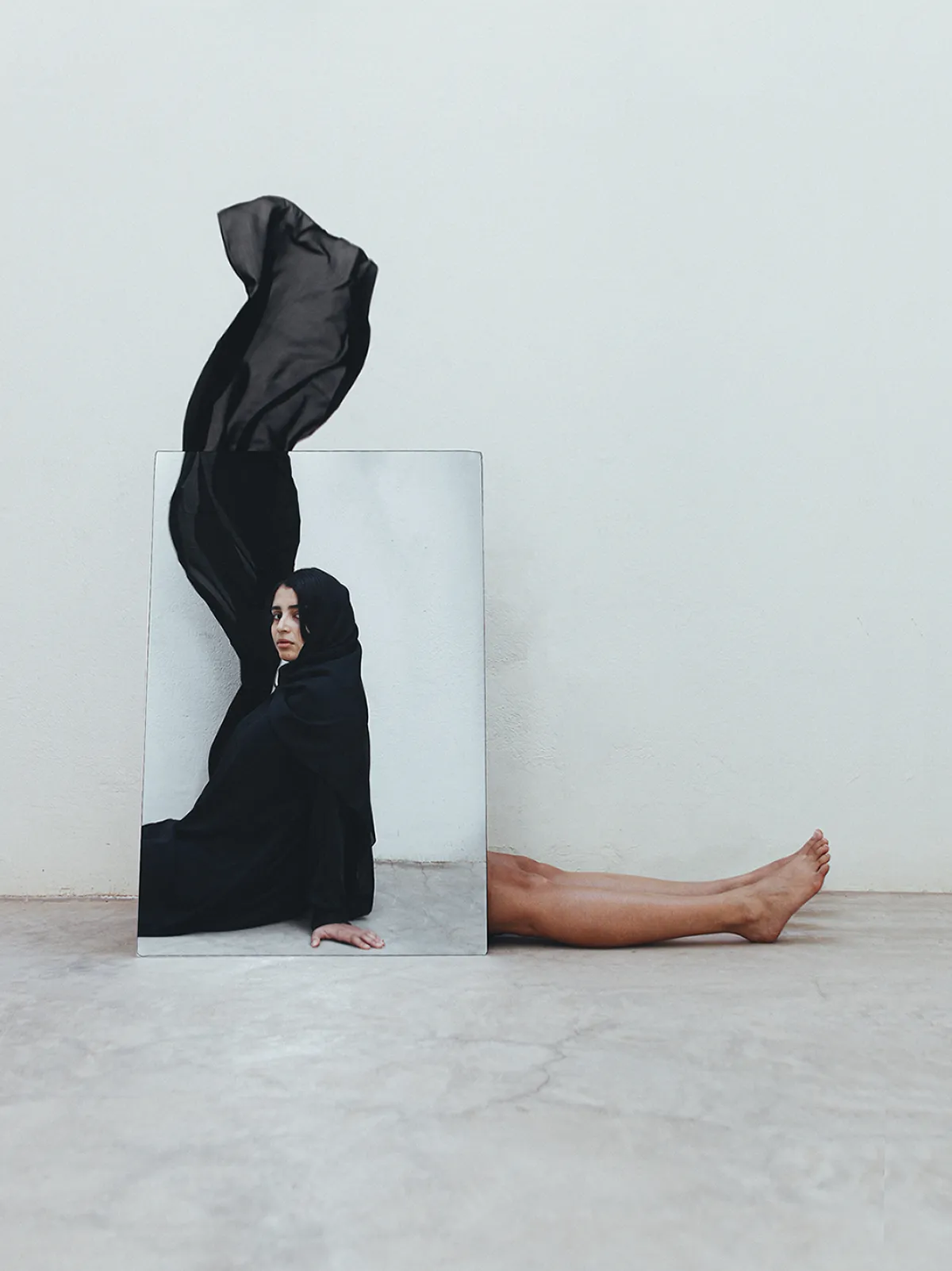
The exhibition is particularly compelling wherever voices from countries of the Global South challenge the Western perspective on the present and identity. Moroccan artist Fatimazohra Serri is one of the exhibition’s key figures. Her works move between documentation and presentation and revolve around female visibility in a conservative society. The images appear like fragile memories or dream sequences; faces vanish into the shadows, spaces seem both familiar and eerie. It is precisely this ambivalence that makes her photographs political without ever becoming illustrative.
“I capture my feelings through the lens of a camera, and in my work explore themes such as womanhood, femininity, and the relationships between men and women. I try to highlight the difficulties and challenges women face in my society, particularly in conservative circles. With every image, I aim to create a powerful narrative that speaks for itself.”
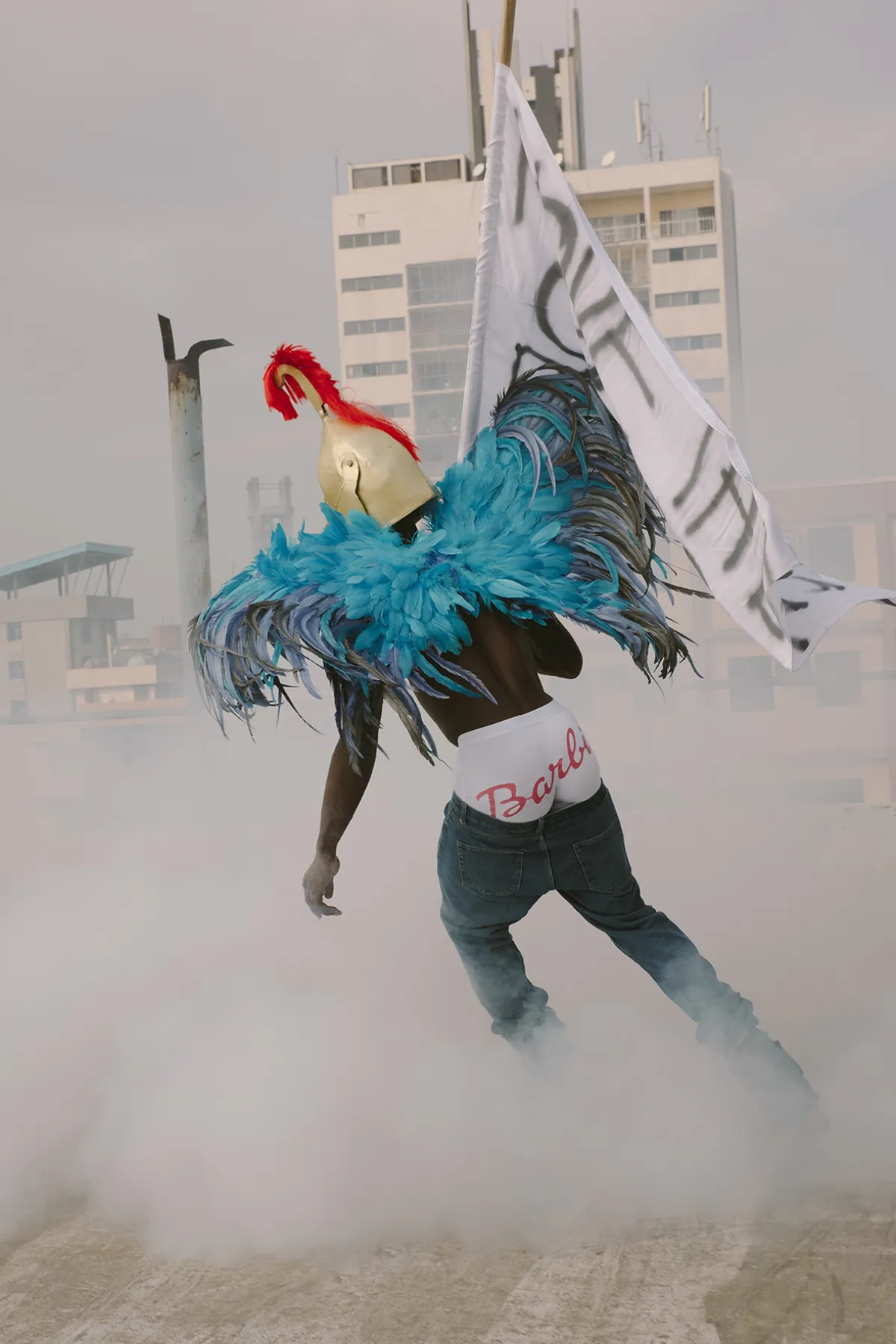
Nigerian artist Daniel Obasi, for his part, works with a highly stylised, almost mythological visual language. His photographs of queer bodies in Nigeria deliberately break with colonial and heteronormative notions of African identity. This is not merely about representation, but about the invention of new visual worlds. Obasi’s figures appear like icons from a future archive—proud, vulnerable, and radically visible all at once.
Equally striking are the works of Bolivian photographer River Claure, whose images connect indigenous traditions with questions of ecological and cultural destruction. His photographs depict landscapes and rituals not as exotic folklore, but as fragile ways of life in the context of neoliberal upheavals. In this way, the exhibition broadens its focus: it deals not only with individual identity politics, but also with global power relations and the disappearance of cultural spaces.
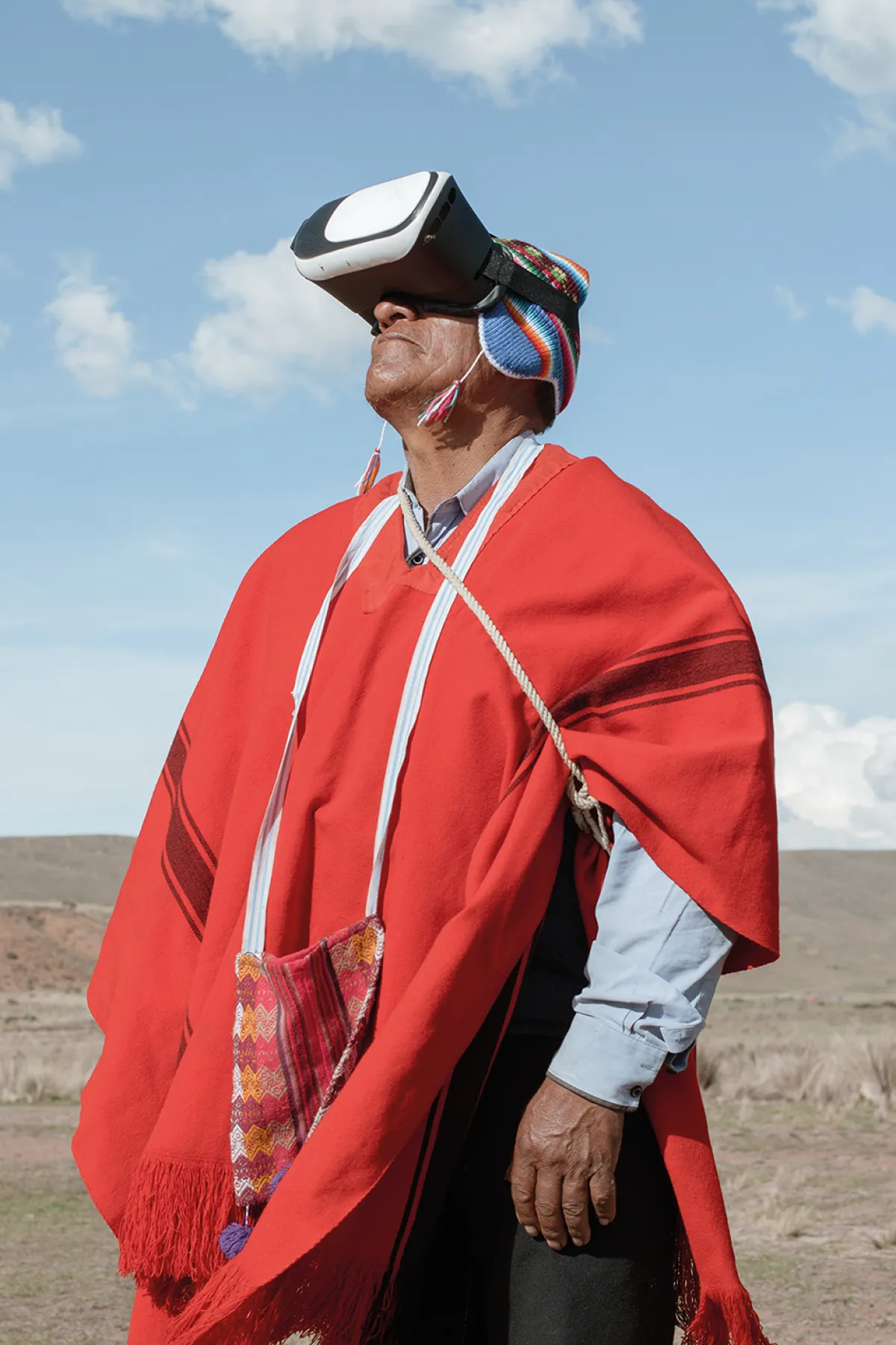
From the series "Warawar Wawa (Son of the Stars)", 2019 – 2020
The exhibition takes on particular relevance in the Frankfurt context. Frankfurt am Main likes to present itself as an international, diverse, and cosmopolitan city. Yet the exhibition reveals that global perspectives are still frequently filtered or simplified within the European cultural scene. “Gen Z” instead seeks to allow these perspectives to coexist without forcing them into a uniform narrative. This aligns well with a venue like the Fotografie Forum Frankfurt, which has been engaging with contemporary photography and socio-political issues for years.
Upon entering, it is immediately apparent that this exhibition does not claim a neutral perspective. Many works are intimate, almost vulnerable. Others deliberately employ staging, artificial colours, or performative elements. Time and again, the impression arises that the artists distrust classical documentary photography. Here, the camera no longer appears as a tool of objective observation, but as a means of self-assertion. The image becomes a stage, a mask, a diary, and a political statement all at once.
The wide aesthetic range is also striking. Alongside classic portrait photography, one finds artificially generated visual worlds, performative self-presentation, and almost painterly compositions. Some works evoke social media aesthetics, while others deliberately subvert them. This creates an interesting tension: although the exhibition focuses on a generation that grew up with digital images, it does not simply reproduce their visual language. Rather, it critically reflects on the constant stream of images in which identity is formed today.
Nevertheless, a certain unease remains. The sheer number of perspectives brought together in this exhibition means that some works risk getting lost in the crowd. Some rooms feel more like a visual archive of current discourses than a precisely curated exhibition. Terms like “diversity,” “representation,” or “identity” appear so frequently that they sometimes lose their edge. At times, it can seem that the show is aiming to make as many voices visible as possible—and in doing so, does not always give sufficient space to individual works.
But perhaps this very sense of overwhelm is part of the concept. “Gen Z” is not a harmonious exhibition. It is loud, fragmentary, and contradictory, and thus captures the present with astonishing precision. While earlier generational exhibitions often attempted to define a common aesthetic language, this show instead highlights the impossibility of a unified perspective.
Consequently, the exhibition is most powerful not as a snapshot of an age group, but as a reflection on the act of seeing itself. Who is looking at whom? Who is allowed to be seen? And which images are still missing? The young artists respond not with certainties, but with open, tentative images. It is this very uncertainty that makes “Gen Z: Shaping a New Gaze” so worth seeing.
+++
Featured artists:
Chloé Azzopardi (FR, 1994), Hidhir Badaruddin (SG, 1995), Daveed Baptiste (US, 1997), Sara Benabdallah (MA, 1995), River Claure (BO, 1997), Sara De Brito Faustino (PT/NL, 1999), Florian Gatzweiler (DE, 1998) & Sascha Levin (DE, 2000), Toma Gerzha (RU, 2003), Mahalia Taje Giotto (CH/IT, 1992), Salomé Gomis-Trezise (FR/GB, 1999), Marvel Harris (NL, 1995), Thembinkosi Hlatshwayo (ZA, 1993), Lorane Hochstatter (CH, 2001), Ben Hubert (GB, 2002), Francesca Hummler (US/DE, 1997), Matej Jurčević (HR, 1995), Lisa Karnadi (ID, 1997), Nur Aishah Kenton (SG/GB, 1998), Ahmed Khirelsid (SD, 2001), Phương Nguyên Lê (VN, 2002), Yunping Li (ES, 1998), Isabella Madrid (CO, 1999), Luna Mahoux (BE, 1996), Gabriela Marciniak (PL, 1996), Cheryl Mukherji (IN, 1995), Daniel Obasi (NG, 1993), Alice Pallot (FR, 1995), Laurence Philomène (CA, 1993), Soyeohang Rai (IN, 2001), Carla Rossi (IT, 1999), Emma Sarpaniemi (FI, 1993), Fatimazohra Serri (MA, 1995), Suwa Shin (KR, 2000), Charlie Tallott (GB, 2000), Varvara Uhlik (UA, 1997), Farren van Wyk (NL/ZA, 1993), Ziyu Wang (CN, 1998), Noyan (CH/TR, 1999), Sophia Wilson (US, 2000).
Booklet
Did you enjoy this text? If so, please support our work by making a one-off donation via PayPal, or by taking out a monthly or annual subscription.
Want to make sure you never miss an article from Literatur.Review again? Sign up for our newsletter here.